Media Summary: NULLs are interesting values. While they fill an important need in the database, it's not always intuitive how different Created by Ryan Holt. All background images were retrieved from the following sources: ... Gate Smashers Shorts: Watch quick concepts & short videos here: Subscribe ...

Sql How To Use Count And Division Operation In Sql Statements - Detailed Analysis & Overview

NULLs are interesting values. While they fill an important need in the database, it's not always intuitive how different Created by Ryan Holt. All background images were retrieved from the following sources: ... Gate Smashers Shorts: Watch quick concepts & short videos here: Subscribe ... In this video, we'll be diving deep into the

Photo Gallery

SQL : How to use count(*) and Division Operation in SQL statements
Basic Aggregate Functions in SQL (COUNT, SUM, AVG, MAX, and MIN)
SQL Aggregates: COUNT(*) aggregate function
Understanding Relational Division in SQL
Intermediate SQL Tutorial | Case Statement | Use Cases
How to DIVIDE TWO NUMBERS in SQL
How to Write Basic SQL Statements (SELECT, FROM)
Intermediate SQL Tutorial | Partition By
Learn Basic SQL in 15 Minutes | Business Intelligence For Beginners | SQL Tutorial For Beginners 1/3
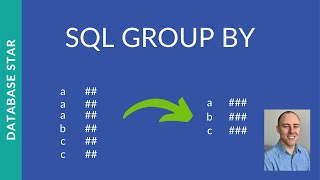
SQL Group By: An Explanation and How To Use It
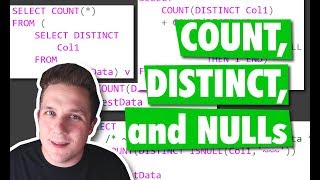
COUNT, DISTINCT, and NULLs in SQL Server
SQL Technique - Using Function Count() with condition Case in select statement
View Detailed Profile
SQL : How to use count(*) and Division Operation in SQL statements

SQL : How to use count(*) and Division Operation in SQL statements

SQL

Basic Aggregate Functions in SQL (COUNT, SUM, AVG, MAX, and MIN)

Basic Aggregate Functions in SQL (COUNT, SUM, AVG, MAX, and MIN)

Learn how to

SQL Aggregates: COUNT(*) aggregate function

SQL Aggregates: COUNT(*) aggregate function

Learn about the

Understanding Relational Division in SQL

Understanding Relational Division in SQL

Intermediate level

Intermediate SQL Tutorial | Case Statement | Use Cases

Intermediate SQL Tutorial | Case Statement | Use Cases

Take

How to DIVIDE TWO NUMBERS in SQL

How to DIVIDE TWO NUMBERS in SQL

This video is about how to

How to Write Basic SQL Statements (SELECT, FROM)

How to Write Basic SQL Statements (SELECT, FROM)

We can write a basic

Intermediate SQL Tutorial | Partition By

Intermediate SQL Tutorial | Partition By

Take

Learn Basic SQL in 15 Minutes | Business Intelligence For Beginners | SQL Tutorial For Beginners 1/3

Learn Basic SQL in 15 Minutes | Business Intelligence For Beginners | SQL Tutorial For Beginners 1/3

WANT MORE? GET MY FULL

SQL Group By: An Explanation and How To Use It

SQL Group By: An Explanation and How To Use It

Get my free

COUNT, DISTINCT, and NULLs in SQL Server

COUNT, DISTINCT, and NULLs in SQL Server

NULLs are interesting values. While they fill an important need in the database, it's not always intuitive how different

SQL Technique - Using Function Count() with condition Case in select statement

SQL Technique - Using Function Count() with condition Case in select statement

Source

Functions in MySQL are easy

Functions in MySQL are easy

MySQL

SQL Division ||| SQL Tutorial

SQL Division ||| SQL Tutorial

Created by Ryan Holt. All background images were retrieved from the following sources: ...

How to use Count(*) twice in one sql statement

How to use Count(*) twice in one sql statement

How to

Writing CASE WHEN Statements in SQL (IF/THEN)

Writing CASE WHEN Statements in SQL (IF/THEN)

Step-by-step tutorial shows you how to

Lec-56: Division Operation in Relational Algebra | Database Management System

Lec-56: Division Operation in Relational Algebra | Database Management System

Gate Smashers Shorts: Watch quick concepts & short videos here: https://www.youtube.com/@GateSmashersShorts Subscribe ...

How to get COUNT of DISTINCT VALUES in SQL

How to get COUNT of DISTINCT VALUES in SQL

This video is about how to get

How to Use COUNT, COUNT(*), and COUNT(DISTINCT) in SQL – A Beginner's Guide

How to Use COUNT, COUNT(*), and COUNT(DISTINCT) in SQL – A Beginner's Guide

In this video, we'll be diving deep into the