Media Summary: Information is physical. Quantum theory and the three basic rules for computing When you look at this maximally entangled state Quantum mechanics involves inherent uncertainty for every event which we call

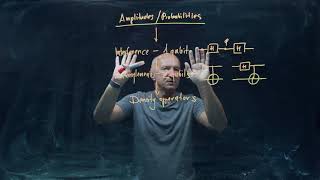
Iqis Lecture 1 2 Probability Amplitudes Continued - Detailed Analysis & Overview

Information is physical. Quantum theory and the three basic rules for computing When you look at this maximally entangled state Quantum mechanics involves inherent uncertainty for every event which we call While we are talking about qubits let me just perhaps address I describe how to Normalization a wave function and use it to determine the Welcome to this special covered edition of

Hello! This is the eighth chapter in my series "Maths of Quantum Mechanics." In this episode, we'll dive into how we calculate ... Quantum interference in action: Ramsey interferometry.

Photo Gallery

IQIS Lecture 1.2 — Probability amplitudes (continued)
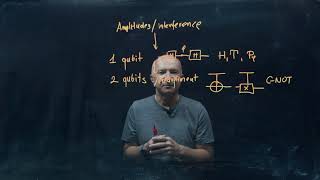
IQIS Lecture 1.1 — Probability amplitudes
IQIS Lecture 5.1 — Overview of Lecture 5
IQIS Lecture 2.1 — Multi-qubit circuits
IQIS Lecture 4.1 — Overview of Lecture 4
001 Introduction to Quantum Mechanics, Probability Amplitudes and Quantum States
IQIS Lecture 3.6 — Shared randomness
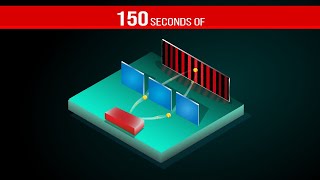
Quantum Probability Amplitudes in 150 Seconds
IQIS Lecture 1.6 — Deterministic, probabilistic, and quantum computation
IQIS Lecture 2.2 — Why qubits?
Wave Functions, Normalization, Probability
IQIS Lecture 3.2 — Dimension argument for entanglement
View Detailed Profile
IQIS Lecture 1.2 — Probability amplitudes (continued)

IQIS Lecture 1.2 — Probability amplitudes (continued)

Quantum theory as a new

IQIS Lecture 1.1 — Probability amplitudes

IQIS Lecture 1.1 — Probability amplitudes

Information is physical. Quantum theory and the three basic rules for computing

IQIS Lecture 5.1 — Overview of Lecture 5

IQIS Lecture 5.1 — Overview of Lecture 5

...

IQIS Lecture 2.1 — Multi-qubit circuits

IQIS Lecture 2.1 — Multi-qubit circuits

... we know that

IQIS Lecture 4.1 — Overview of Lecture 4

IQIS Lecture 4.1 — Overview of Lecture 4

...

001 Introduction to Quantum Mechanics, Probability Amplitudes and Quantum States

001 Introduction to Quantum Mechanics, Probability Amplitudes and Quantum States

In this series of physics

IQIS Lecture 3.6 — Shared randomness

IQIS Lecture 3.6 — Shared randomness

When you look at this maximally entangled state

Quantum Probability Amplitudes in 150 Seconds

Quantum Probability Amplitudes in 150 Seconds

Quantum mechanics involves inherent uncertainty for every event which we call

IQIS Lecture 1.6 — Deterministic, probabilistic, and quantum computation

IQIS Lecture 1.6 — Deterministic, probabilistic, and quantum computation

... on

IQIS Lecture 2.2 — Why qubits?

IQIS Lecture 2.2 — Why qubits?

While we are talking about qubits let me just perhaps address

Wave Functions, Normalization, Probability

Wave Functions, Normalization, Probability

I describe how to Normalization a wave function and use it to determine the

IQIS Lecture 3.2 — Dimension argument for entanglement

IQIS Lecture 3.2 — Dimension argument for entanglement

...

IQIS — An introduction to the course

IQIS — An introduction to the course

Welcome to this special covered edition of

IQIS Lecture 1.4 — Ramsey interferometry via matrices and circuit diagrams

IQIS Lecture 1.4 — Ramsey interferometry via matrices and circuit diagrams

...

Ch 8: Why is probability equal to amplitude squared? | Maths of Quantum Mechanics

Ch 8: Why is probability equal to amplitude squared? | Maths of Quantum Mechanics

Hello! This is the eighth chapter in my series "Maths of Quantum Mechanics." In this episode, we'll dive into how we calculate ...

IQIS Lecture 3.1 — Overview of entanglement

IQIS Lecture 3.1 — Overview of entanglement

...

IQIS Lecture 1.3 — Ramsey interferometry

IQIS Lecture 1.3 — Ramsey interferometry

Quantum interference in action: Ramsey interferometry. https://thosgood.com/quantum-info/book/chapter1.html#interferometers.

IQIS Lecture 6.4 — Phase kick-back

IQIS Lecture 6.4 — Phase kick-back

... cos phi over

IQIS Lecture 2.6 — Unitaries as three rotations

IQIS Lecture 2.6 — Unitaries as three rotations

So here is