Media Summary: You would yes and what is that going to give you you would divide right P of alignment and the symbol divide symbol But anyway so the recap is going back if you have a Because I'm when I'm giving you PFW 3 given W1 and W2 that's means W1 I'm giving you the

11 785 Spring 23 Lecture 16 Sequence To Sequence Models Ctc - Detailed Analysis & Overview

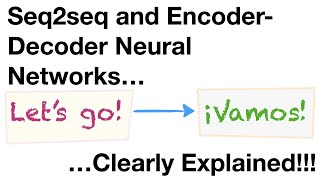
You would yes and what is that going to give you you would divide right P of alignment and the symbol divide symbol But anyway so the recap is going back if you have a Because I'm when I'm giving you PFW 3 given W1 and W2 that's means W1 I'm giving you the Putting a probability distribution over all of the classes right this is a Time series and now if I tell you that the target So in closing we've looked at various forms of In this video, we introduce the basics of how Neural Networks translate one language, like English, to another, like Spanish.

It I'm calling it posterior because it's conditioned on having this one and having this input ... me begin we're going to continue our uh series of As the connectionist temporal classification or The professional version of this graduate course, XCS224N Natural Language Processing with Deep Learning, runs June ... Don't Forget To Subscribe, Like & Share Subscribe, Like & Share If you want me to upload some courses please tell me in the ...

Photo Gallery

11-785 Spring 23 Lecture 16: Sequence to Sequence Models CTC
11-785 Spring 23 Lecture 3: Sequence to Sequence Model CTC
11-785, Fall 22 Lecture 16: Sequence to Sequence models: Connectionist Temporal Classification
11-785 Spring 23 Lecture 18: Sequence to Sequence models:Attention Models
F23 Lecture 16: Sequence to Sequence Models, Connectionist Temporal Classification
11-785 Spring 23 Lecture 17: Language Models and Sequence to Sequence Prediction
F23 Lecture 16: Sequence to Sequence Models, Connectionist Temporal Classification
S18 Sequence to Sequence models: Attention Models
Sequence-to-Sequence (seq2seq) Encoder-Decoder Neural Networks, Clearly Explained!!!
S2025 Lecture 16 - Sequence to Sequence models
S2025 Lecture 18 - Sequence to Sequence models: Attention Models
F23 Lecture 16 part 2: Sequence to Sequence Models, Connectionist Temporal Classification (Part 2)
View Detailed Profile
11-785 Spring 23 Lecture 16: Sequence to Sequence Models CTC

11-785 Spring 23 Lecture 16: Sequence to Sequence Models CTC

Finding alignments for sequencer

11-785 Spring 23 Lecture 3: Sequence to Sequence Model CTC

11-785 Spring 23 Lecture 3: Sequence to Sequence Model CTC

Finding alignments for sequencer

11-785, Fall 22 Lecture 16: Sequence to Sequence models: Connectionist Temporal Classification

11-785, Fall 22 Lecture 16: Sequence to Sequence models: Connectionist Temporal Classification

You would yes and what is that going to give you you would divide right P of alignment and the symbol divide symbol

11-785 Spring 23 Lecture 18: Sequence to Sequence models:Attention Models

11-785 Spring 23 Lecture 18: Sequence to Sequence models:Attention Models

But anyway so the recap is going back if you have a

F23 Lecture 16: Sequence to Sequence Models, Connectionist Temporal Classification

F23 Lecture 16: Sequence to Sequence Models, Connectionist Temporal Classification

To the uh the compressed

11-785 Spring 23 Lecture 17: Language Models and Sequence to Sequence Prediction

11-785 Spring 23 Lecture 17: Language Models and Sequence to Sequence Prediction

Because I'm when I'm giving you PFW 3 given W1 and W2 that's means W1 I'm giving you the

F23 Lecture 16: Sequence to Sequence Models, Connectionist Temporal Classification

F23 Lecture 16: Sequence to Sequence Models, Connectionist Temporal Classification

Putting a probability distribution over all of the classes right this is a Time series and now if I tell you that the target

S18 Sequence to Sequence models: Attention Models

S18 Sequence to Sequence models: Attention Models

So in closing we've looked at various forms of

Sequence-to-Sequence (seq2seq) Encoder-Decoder Neural Networks, Clearly Explained!!!

Sequence-to-Sequence (seq2seq) Encoder-Decoder Neural Networks, Clearly Explained!!!

In this video, we introduce the basics of how Neural Networks translate one language, like English, to another, like Spanish.

S2025 Lecture 16 - Sequence to Sequence models

S2025 Lecture 16 - Sequence to Sequence models

It I'm calling it posterior because it's conditioned on having this one and having this input

S2025 Lecture 18 - Sequence to Sequence models: Attention Models

S2025 Lecture 18 - Sequence to Sequence models: Attention Models

... me begin we're going to continue our uh series of

F23 Lecture 16 part 2: Sequence to Sequence Models, Connectionist Temporal Classification (Part 2)

F23 Lecture 16 part 2: Sequence to Sequence Models, Connectionist Temporal Classification (Part 2)

As the connectionist temporal classification or

(Old) Lecture 17 | Sequence-to-sequence Models with Attention

(Old) Lecture 17 | Sequence-to-sequence Models with Attention

Carnegie Mellon University Course:

CMU Introduction to Deep Learning 11785, Spring 2026: Sequence to Sequence Models: CTC

CMU Introduction to Deep Learning 11785, Spring 2026: Sequence to Sequence Models: CTC

Lecture 16

Stanford CS224N: NLP with Deep Learning | Spring 2024 | Lecture 6 - Sequence to Sequence Models

Stanford CS224N: NLP with Deep Learning | Spring 2024 | Lecture 6 - Sequence to Sequence Models

The professional version of this graduate course, XCS224N Natural Language Processing with Deep Learning, runs June ...

Sequence Models  Complete Course

Sequence Models Complete Course

Don't Forget To Subscribe, Like & Share Subscribe, Like & Share If you want me to upload some courses please tell me in the ...

CMU Introduction to Deep Learning 11785, Spring 2026: Sequence to Sequence Models: Attention Models

CMU Introduction to Deep Learning 11785, Spring 2026: Sequence to Sequence Models: Attention Models

Lecture